
Digital Transformation and Leadership
9-week, on-site programme on Fridays and Saturdays
EUR 5000 + VAT (100% funded by the EU)
Designed for senior and mid-level managers, this 9-week programme runs on Fridays and Saturdays, guiding participants through AI and technology applications in leadership. Combining expert insights with practical exercises, participants explore innovation, organizational change, and strategic leadership while developing and presenting a hands-on AI project, gaining the skills to drive transformation and make technology work for their organization.
*This programme is implemented within the project “Development of Digital Skills for New Products and Technologies in Latvian Enterprises”, Agreement No. 2.3.1.2.i.0/1/24/I/CFLA/002, co-funded by the European Union.
Faculty
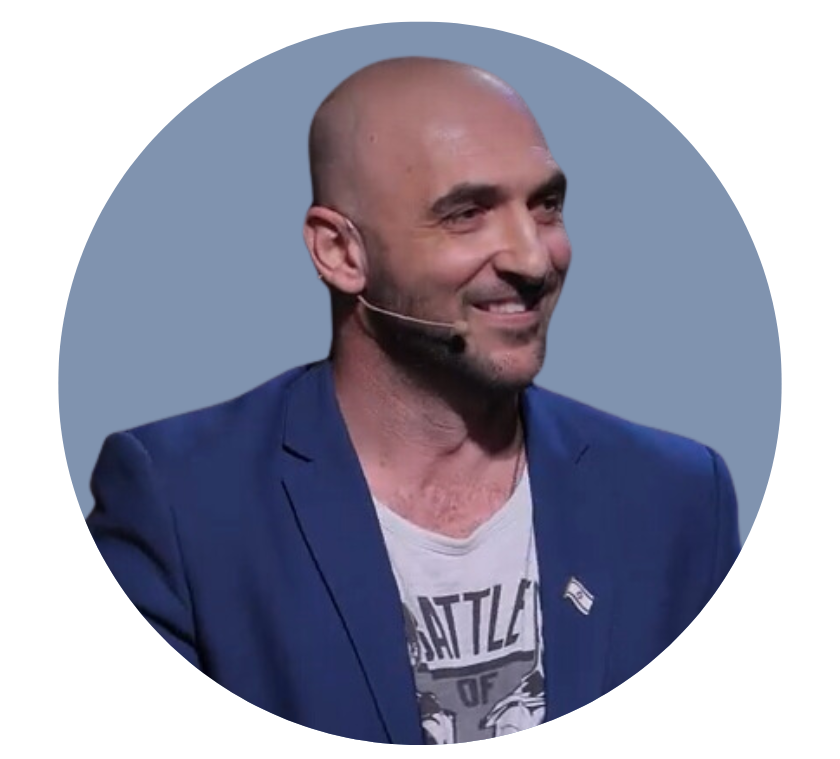
Yoad Mick is the CEO of IMAgym and an imagination coach. Having reimagined himself throughout his career, Yoad’s journey has taken him from advertising, working on global brands at renowned agencies like Saatchi & Saatchi, BBDO, and Ogilvy, to becoming a creative director and then a marketing executive in the iGaming industry.
In every step, Yoad’s number one KPI to successfully achieving all other KPIs was always: Keep People Imagining, in a fun and safe atmosphere. Yoad’s journey has also taken him from Israel to Finland, to realize his passion for imagination, and to combine all his experience to develop this unique IMAGYM training methodology.
Today, Yoad trains individuals, managers, organizations, and academia to hack into their imagination and use it as a powerful tool for creating meaningful change, development, and empowerment. In addition, Yoad is a self-taught “Imagination Alchemy” artist, aspiring musician, and actor. He holds a major in psychology, is a reserve duty officer, and draws most of his imaginative inspiration from his three super girls.

Ernests Štāls is the Founder and CEO of Starwatcher.io, a platform that maps and analyzes startups using AI and embeddings. He leads product, strategy, and growth, translating complex technologies into actionable insights for founders. As a Venture Partner at Superhero Capital, Ernests supports Baltic startups with investment, go-to-market strategies, and fundraising guidance.
With deep roots in the Latvian and Baltic startup ecosystem, Ernests has been mentoring founders and early-stage teams for over a decade through programs like Startup Wise Guys, LIAA Business Incubator, TechHub Riga, and Innovation Academy. His focus spans AI, team building, product-market fit, and technology-driven innovation.
Ernests combines hands-on entrepreneurial experience with a passion for teaching and sharing insights, helping leaders and innovators navigate the intersection of technology, strategy, and growth.

Dmitrijs Kravčenko is an Associate Professor of Business and Management at the Stockholm School of Economics in Riga, where he leads the entrepreneurship curriculum and directs the Business Lab incubator. His teaching and research focus on innovation, entrepreneurship education, and the impact of digital technologies on organizations and work.
With a PhD in Management from Warwick Business School, Dmitrijs has previously taught at the University of Warwick and the University of Sussex and remains active in major European research initiatives, including Horizon 2020 projects on creative economies and digital futures. He also serves as an associate researcher at the ESRC Digital Futures of Work Centre in the UK and as a visiting professor at Vilnius University.
Beyond academia, Dmitrijs is the co-founder and host of the Talking About Organizations Podcast—one of the largest global platforms for discussions on management and organizational studies. His work bridges research and practice, helping leaders understand how knowledge, technology, and innovation shape the future of business.
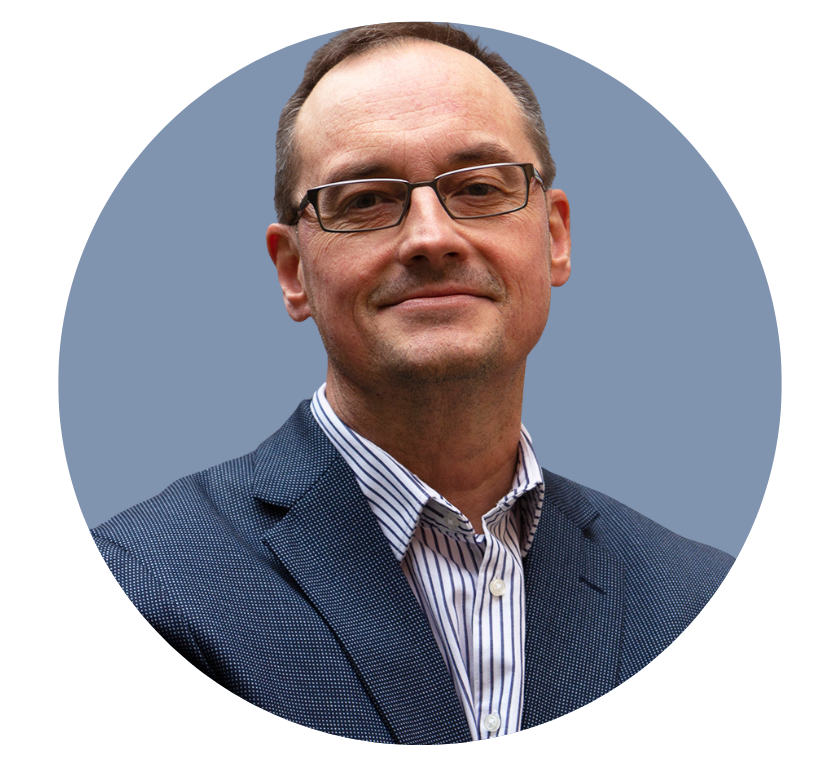
Viesturs Sosārs is a serial entrepreneur, investor, and mentor with deep experience in building and scaling early-stage ventures. He has co-founded multiple companies, managed an early-stage investment fund, and continues to support startups as an angel investor.
Currently, Viesturs leads the Pre-accelerator at Startup House Riga, serves on the board of the Digital Accelerator of Latvia, and co-founded Cogentia, an advisory firm specializing in innovation strategy and product development. He also lectures at the SDSI Master’s programme and mentors founders through accelerators such as Buildit.
Passionate about innovation and entrepreneurship education, Viesturs believes in the power of learning through doing, “failing forward,” and helping ambitious ideas become investment-ready businesses.

Rihards Garančs is the Executive Education Managing Director at SSE Riga and lecturer in undergraduate and Executive MBA programmes across the Stockholm School of Economics in Riga, Russia, and Hanken Executive Education in Helsinki. He is the Course Director of the Artificial Intelligence, Data Analysis and Business & Leadership Skills courses. He is also the Topic Lead for Digital Transformation at the SSE Riga Institute for Strategy.
Rihards runs a consulting practice that develops Business Intelligence, Data Strategy, Data & Digital capability building solutions. He helps companies & their employees advance in business analytics using the latest digital tools.
Rihards holds a double degree MBA in HEC Paris and National University of Singapore, a BSc in Economics & Business from SSE Riga as well as Data Science certification.

Kristaps Banga, with over 20 years of experience in business management, change management consulting, innovation, sales and marketing, is the Head of Innovation at Accenture Baltics. He excels in driving business growth, transformation, and innovation strategy development. Since 2023, Kristaps leads Accenture global Space Innovation's go-to-market activities in Europe, developing integrated strategies and enhancing business performance.
Kristaps has held key roles at Carlsberg Group, MTG, Peugeot, and TET, and founded several companies. He holds a Bachelor's in Economics (Ventspils University College), a Master's in Marketing (University of Latvia), and currently is a PhD student in Innovation Management (Riga Technical University). His education includes courses from London Business School, HarvardX, Dartmouth College, and HEC Paris.
An international speaker, lecturer, and workshop facilitator, Kristaps specializes in strategy, innovation, and business design. He is a guest lecturer at the Service Design Strategies and Innovations master's program and has lectured at BA School of Business and Finance, Business Academy, Riga Business School, Art Academy of Latvia, University of Latvia, and BMI Executive Institute. He is also an active mentor and board advisor to several startups.

M. Wallace Green is a startup coach, mentor, and angel investor who has supported hundreds of early-stage ventures across Central and Eastern Europe since 2015. He specializes in helping founders refine their value propositions, positioning, and storytelling to attract investors, partners, and media.
As Founding Partner at ActNow Venture Partners, Wallace focuses on early-stage investments in European deep tech, SaaS, and climate tech startups. He also serves as a startup trainer with Baltic Sandbox Ventures and Civitta, while advising companies such as Fractory and Soter Analytics. Previously, he held leadership roles at Startup Wise Guys and Capgemini Consulting, where he worked on digital transformation strategies for global clients.
Recognized across the Baltics, Nordics, and Ukraine as a dedicated mentor and ecosystem supporter, Wallace combines investment expertise with hands-on coaching to accelerate startup impact and growth.

Peter Zashev is an academic, business trainer and high-energy speaker on leadership, change and team performance, co-author of the HPT Index online assessment tool. Peter has more than 15 years of executive education experience working with the management of big companies across Europe and mainly in the Nordic countries, the Baltic States and Russia. His experience, knowledge and skills draw on:
Academia - holding a MSc degree from the St Petersburg State University in Russia and a PhD from Hanken School of Economics in Finland, currently Peter is a Program Director at Hanken & SSE Executive Education, Finland and an Adjunct Professor at the Stockholm School of Economics in Riga.
Business – Being himself an active entrepreneur and board member, he has considerable consulting experience featuring private customers and projects in business strategy and organization as well as offering expert services to national and international organizations.
Multicultural - Peter is Bulgarian by origin, Finnish by nationality, Estonian by residence, half Swedish by workplace and with extensive Russian experience. He speaks English, Russian, Bulgarian and Finnish.

Anete Pajuste teaches finance and accounting at the undergraduate and executive levels at the Stockholm School of Economics in Riga. She has extensive experience and training in participant-centered learning methods such as cases and experiential learning. Her articles have appeared in journals including the Journal of Corporate Finance, the Oxford Review of Economic Policy and the Journal of Banking and Finance. She is a research member of the European Corporate Governance Institute (ECGI). Professor Pajuste serves as a consultant on firm valuation, cost accounting, investment management and financial planning issues and shares her practical knowledge from investing in equities, index funds and real estate.
Programme content
Week 1
On Friday, Yoad Mick kicks off the programme with sessions on breaking paradigms, pushing boundaries, and sparking creativity. Saturday continues with Ernests Štāls introducing participants to the architecture of modern AI and large language models.
Week 2
Friday focuses on AI in sociotechnical systems and knowledge work with Dmitrijs Kravčenko. Saturday begins the hands-on Innovation Project Lab with Viesturs Sosārs, where participants start shaping their own AI-driven projects.
Week 3
Friday, Rihards Garančs explores technology transformation and strategy. Saturday, Ernests Štāls dives into building AI assistants and vibe-coding basics.
Week 4
Friday features an AI-driven organizational change simulation with Dmitrijs Kravčenko. Saturday continues project development in the Innovation Project Lab with Viesturs Sosārs.
Week 5
On Friday, Kristaps Banga leads a session on business process development. Saturday, Ernests Štāls shows how to integrate AI into business processes and design around it.
Week 6
Friday covers strategizing for competitive advantage, metrics, and futures thinking with Dmitrijs Kravčenko. Saturday is again dedicated to the Innovation Project Lab with Viesturs Sosārs.
Week 7
Friday, Wallace Green leads storytelling and pitching in a corporate context. Saturday, Peter Zashev focuses on leadership in times of change and uncertainty.
Week 8
Friday, Anete Pajuste runs a crash course in managerial finance. Saturday continues with the Innovation Project Lab with Viesturs Sosārs.
Week 9
The programme closes with final project preparation, pitching drills, and Demo Day, where participants present their innovation projects to an expert jury led by Viesturs Sosārs.
Breaking Paradigms & Creative Thinking
Faculty: Yoad Mick
This opening module introduces IMAGYM – an imagination gym designed to unlock creativity, confidence, and authentic leadership. Through experiential and playful exercises, participants learn how to bypass self-imposed limitations, step outside comfort zones, and reconnect with their innate capacity for imagination. The session lays the foundation for a transformative mindset that fuels innovation, empowers teams, and inspires leaders to envision futures not bound by present constraints.
Introduction to Modern AI & LLMs
Faculty: Ernests Štāls
This module explores how humanity’s relationship with information has evolved—from spoken word and books to the internet, search engines, and now AI. Participants gain an intuitive understanding of modern AI architecture, including transformers and large language models, without the need for technical math. The session balances history, theory, and practice, concluding with hands-on exploration of chatbots to set the stage for deeper applications of AI.
Understanding AI as a Sociotechnical System
Faculty: Dmitrijs Kravčenko
This module goes beyond viewing AI as just another tool, instead framing it as part of a larger sociotechnical system where humans, machines, and organizational routines constantly interact. Participants will explore how these subtle yet powerful reconfigurations shape organizational outcomes, why many change initiatives fail, and how to identify the critical junctions between human expertise and technological capabilities. The session builds a deeper appreciation of how AI transforms not just tasks, but the very fabric of organizational life.
Innovation Project Lab
Faculty: Viesturs Sosārs
This hands-on module brings innovation to life by guiding participants through the process of developing a new product, service, or business process with the help of AI. Using lean and iterative methods, participants will test ideas, validate assumptions, and prototype solutions. The lab culminates in a stage pitch and demo to an external jury, giving participants the chance to showcase both their process and outcomes. Along the way, they will adopt an experimental mindset, learn to navigate uncertainty, and gain practical experience in applying AI as a driver of innovation.
Strategic Technology Transformation
Faculty: Rihards Garančs
This module takes a big-picture view of how strategy and technology intersect, with a special focus on AI. Participants will explore how to align technology initiatives with business goals, avoid common pitfalls in digital transformation, and measure the real impact of innovation. Beyond the technical side, the course highlights the human element of change—why culture is often the biggest challenge and how leaders can foster the right mindset for transformation. By the end, participants will have a clearer roadmap for leveraging emerging technologies as a driver of sustainable business growth and competitive advantage.
Building Assistants and Vibe-Coding Basics
Faculty: Ernests Štāls
This hands-on module explores how to move beyond simple prompting toward building practical AI assistants. Participants will learn the basics of vibe-coding—creating simple software without deep technical knowledge—and get introduced to IDEs (interactive development environments) as powerful tools for managing workflows, even for non-coders. Through an agent workshop, you’ll design and test simple assistants, connect them with existing tools like Revit, and gain practical insights into how to delegate tasks effectively to machines. By the end, you’ll walk away with working assistants and the know-how to integrate them into real-world contexts.
Organizational Change and AI
Faculty: Dmitrijs Kravčenko
This module focuses on the human side of AI adoption in organizations. Through a hands-on simulation, participants explore how subtle resistance, shifting priorities, and cultural frictions can derail initiatives. You’ll connect these experiences to frameworks in change leadership, sensemaking, and innovation diffusion, gaining practical tools to anticipate challenges, foster collaboration, and drive AI transformation successfully.
Innovation Process Management
Faculty: Kristaps Banga
This module takes an executive view of running and building innovation in an AI-driven world. Participants learn to assess innovation capabilities, design fit-for-purpose governance, and orchestrate internal, external, and hybrid ecosystems. Using a dual-mindset approach and S-curve strategy, you’ll align projects into a balanced, value-creating portfolio and gain practical tools to scale experiments, manage risk, and measure impact effectively.
Integrating AI and Building Processes Around It
Faculty: Ernests Štāls
This module focuses on applying and reflecting on AI integration in organizations. Through team presentations and discussions, participants share learnings, explore emerging trends, and examine ethical and practical challenges. The session also looks ahead to future skills and developments, preparing you to build AI-ready processes and respond effectively to what’s next.
Strategizing for Competitive Advantage with AI
Faculty: Dmitrijs Kravčenko
This module explores how AI can drive real competitive advantage when aligned with strategy. Participants examine emerging business models, ecosystems, and data-driven strategies, learning to distinguish true strategic opportunities from hype. By the end, you’ll gain tools to evaluate AI’s impact, shape competitive positioning, and measure value effectively.
Storytelling and Pitching in a Corporate Context
Faculty: Wallace Green
This hands-on module equips participants with the skills to communicate AI-driven innovation with clarity and impact. You’ll learn frameworks for storytelling, structuring persuasive pitches, and translating complex concepts into engaging narratives. By the end, you’ll be able to craft compelling pitches, build credibility, and increase influence within your organization.
Leadership in Change and Uncertainty
Faculty: Peter Zashev
This transformative one-day workshop empowers leaders to navigate uncertainty and drive meaningful change. Participants explore strategies to inspire teams, overcome resistance, and build sustainable momentum, while deepening self-awareness and leadership character. By the end, you’ll gain practical tools to lead with confidence, resilience, and lasting impact.
Crash Course in Managerial Finance
Faculty: Anete Pajuste
This module equips managers with practical skills to interpret financial statements, analyze performance, and make informed decisions. Participants will also explore how AI can streamline financial analysis, turning complex reports into actionable insights. By the end, you’ll gain confidence in reading financial data, communicating findings, and using AI to enhance decision-making.
How to apply
To apply for the programme, please send an email to santa.laksa@digitallatvia.lv
